Our philosophy:
Over many years of raising goats, management is always evolving. As any experienced goat breeder can tell you, you never stop learning when raising goats! We neither want to over manage or under manage our goats. That being said, dairy goats have been far removed from their wild counterparts and cannot be treated as if they were "in the wild". Dairy goats have been bred as domesticated livestock for production. This means they need a high quality diet to thrive and reach peak function.
It is important to realize that there is no "one size fits all" with goats. That being said, we do have over 12 years of experience managing a successful herd. I encourage those that are interested in our goats to read this page and give it some thought prior to bringing home their Wings & Caprines animals. All in all, we try to keep things simple and realistic!
It is important to realize that there is no "one size fits all" with goats. That being said, we do have over 12 years of experience managing a successful herd. I encourage those that are interested in our goats to read this page and give it some thought prior to bringing home their Wings & Caprines animals. All in all, we try to keep things simple and realistic!
Hay
|
Hay is THE most important nutritional aspect while raising dairy goats. Do not skimp here! Quality hay fed free choice (meaning the feeders are full 24/7) will do more for your herd than any grain, supplement, or protein bucket. Feeding quality hay often reduces or eliminates the need to give a plethora of additional supplements (feed/grain not included).
|
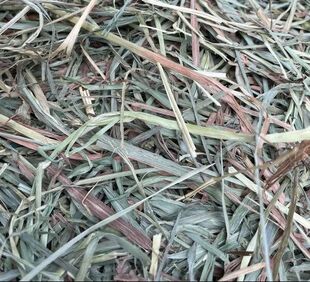
Beautiful premium quality Orchard Grass Hay
|
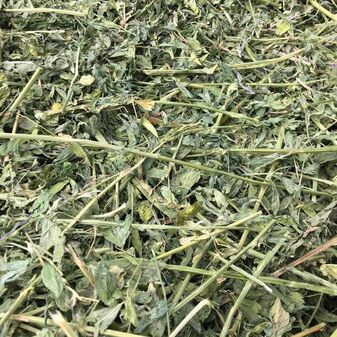
Leafy, nutritious alfalfa
|
What we do....All our goats are fed Premium Orchard Grass hay, we keep it available free choice, 24/7 365 days a year! Milking does, bucks, kids, retired does, they are all fed this hay.
Milking does are given limited amounts of alfalfa during peak production. It is not easy to find premium alfalfa in our region, and we are grateful when we can find beautiful alfalfa! In addition to the the milking does, we do give our bucks alfalfa while in rut. Our standard breed kids (Lamanchas) may get some alfalfa, but we typically do not feed it to our Nigerian kids in an effort to keep their weight manageable. |
Feed....
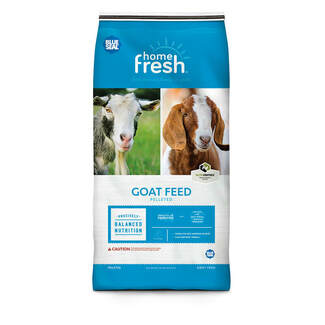
After many years and trying multiple brands of feeds, including Bartlett, Purina, Dumor, and others, we are feeding Blueseal feeds. BlueSeal has been by far the the best quality feed we have used while raising goats, and what we feel is the "gold standard" of feeds.
|
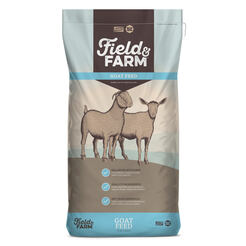
Our does receive a mix of the Blue Seal Field & Farm Textured 18% and 20% Homefresh dairy pellets. We also give a top dress of beet pulp shreds for the extra fiber. Does eat twice a day on the milk stand. Amount depends on body condition and milk production.
Our bucks are fed the 20% Homefresh dairy pellets with alfalfa pellets added as needed. Bucks are fed twice daily when in rut and once daily when out of rut. |
|
Our kids are also given Homefresh 20%, fed free choice until 4-6 months or so (depending on how much the kids are consuming and body condition). After this point, kids are given feed twice daily. NOTE: Standard Lamancha kids will likely need to be raised on free choice feed until 8-12 months of age. If kids are not raised on a daily coccidiostat, medicated feed is recommended!
|
|
Vaccines...
|
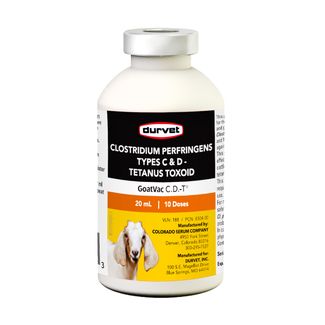
We have a pretty minimalistic approach when it comes to vaccines. Our goats are very healthy and we have not had the need to give anything more than a CDT vaccine. If we ever have the need to vaccinate for additional illnesses, we would not hesitate to do so. Given that Clostridium Perfringen illnesses are very rare here on our farm, we typically vaccinate our kids during their first fall season, this allows us to keep most of our goats on the same vaccine schedule. We only use the Goat Vac brand of CDT, and always discard unused contents immediately. We follow the manufactures instructions and only administer this vaccine subcutaneously.
|
Parasite Management & Treatment...
|
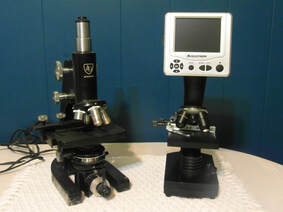
We are very fortunate that we do not have a "parasite problem" despite the wet, soggy, humid NC weather! This is due to diligence in parasite management and having healthy goats with good parasite resistance. We utilize the McMasters method to get an exact Eggs Per Gram (EPG) count alongside with FAMACHA scoring. Our senior does & bucks are only dewormed as needed, and we have never needed to deworm our kids. We have great success with Safeguard and Ivermectin, our herd has not built a resistance to these chemicals. We have never needed to dual (combo) deworm and do not support that practice. We have great efficacy with Safeguard and ivermectin.
|
|
Coccidia Prevention...
|
While we are against of the overuse of chemicals, coccidia prevention is a must for many herds. We have not had a "coccidia problem" in our goat kids, but given that we live in the hot, humid, soggy south, it is a very hospitable environment for coccidia to flourish. Far too many wait until kids are symptomatic to treat, once this point is reached the kids are already damaged and chances of survival diminish and growth may be stunted. This is where the old mindset of "an ounce of prevention is better than a pound of cure" comes into mind. Having consulted many, many farms over the years, the amount of loss [on other farms] due to coccidia in seemingly healthy/non-symptomatic kids was astonishing! This was enough for us to always keep our kids on some sort of prevention.
|
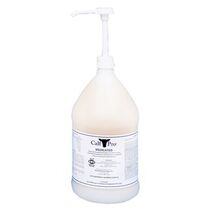
We utilize Calf Pro, given in the milk once daily at the calf dosage (1cc per 11lbs). This has worked very well for us and is used by many other successful herds. As always, one should always follow the recommendations of their veterinarian
Bottle & Bucket feeding...
All of our kids are bottle fed and raised on heat treated colostrum and pasteurized milk. After trying individual bottles, trough feeding, and several types of lambar setups, we have found that using the Caprine Supply system on square buckets work best for our setup. Kids are initially started on the bottle, using the Caprine Supply style nipple. Once colostrum is fed kids are transitioned to the lambbar at 3-10 days old, depending on the kid. The milk is warmed to approximately 100*F and promptly fed.
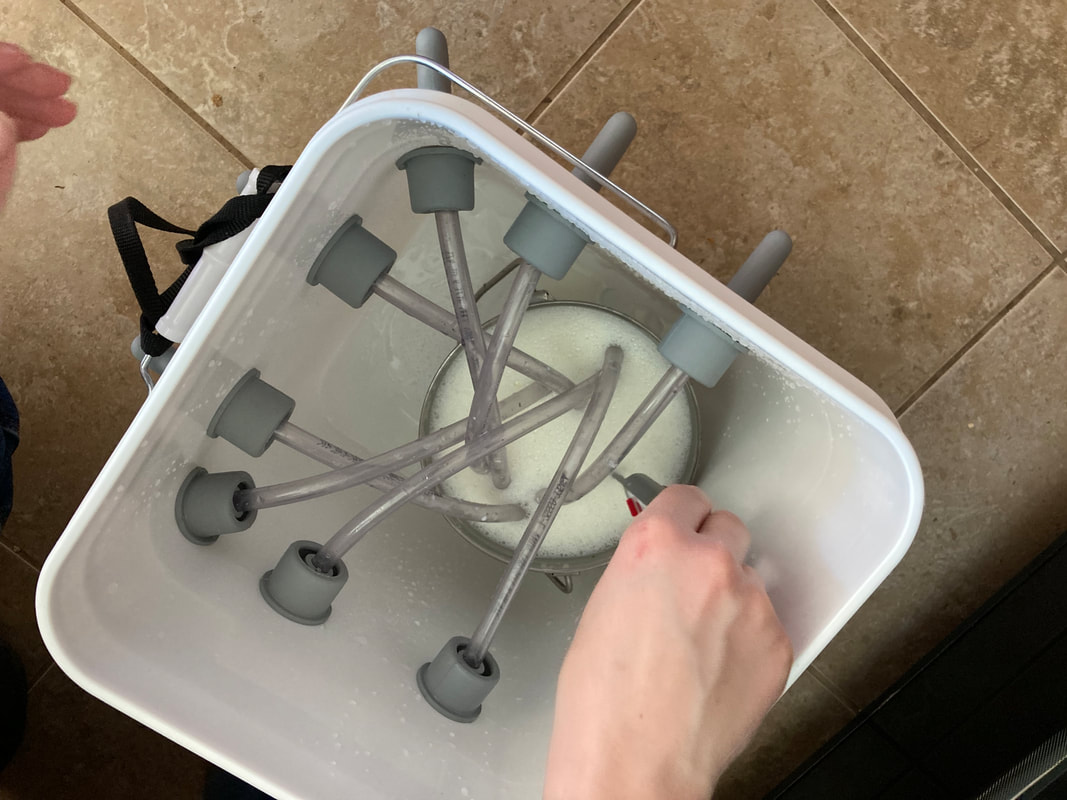
When training young kids, the plastic bucket is filled with warm water, and a second smaller bucket is placed within the lambar, filled with milk. This makes it an easier transition for the kids and keeps the milk warm. The tubes are "primed" with a 12cc syringe so kids will get an instant reward once they start suckling
|
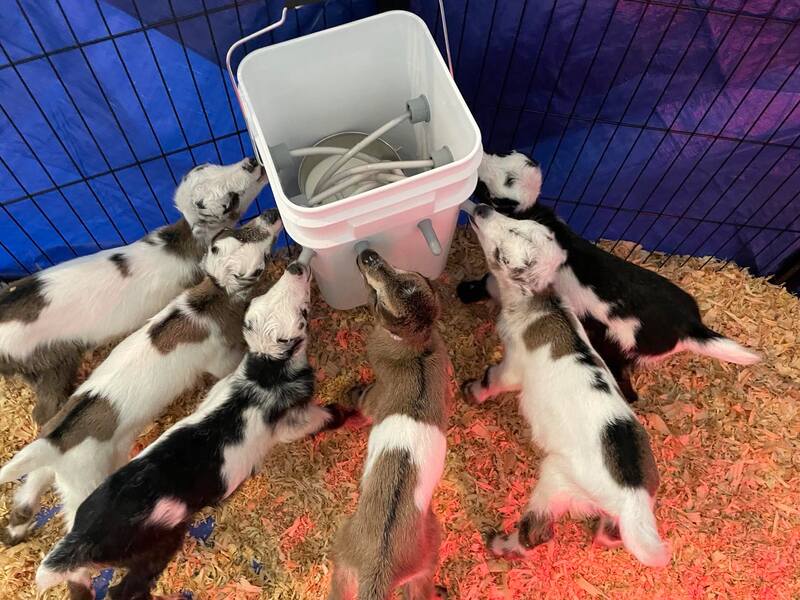
First time on the bucket! Success! These kids needed minimal help transitioning to the bucket. Smart kids!
|
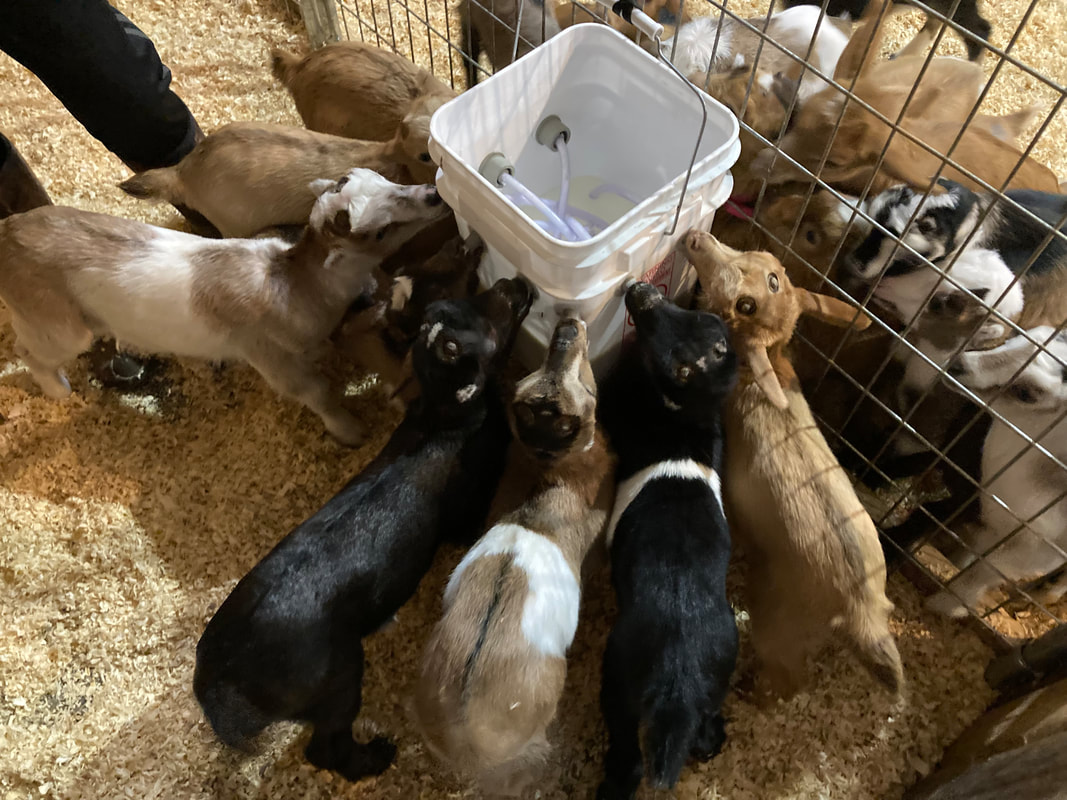
Slightly older kids, they no longer need the smaller bucket nor do they need the tube primed. Kids are always monitored to make sure each gets enough to eat.
|